Serving Santa Clara, CA and surrounding areas. (669) 285-6074
Serving Santa Clara, CA and surrounding areas. (669) 285-6074
Santa Clara Concrete Company is a licensed concrete contractor serving Palo Alto, CA, installing pool decks, driveways, patios, and slab foundations on Eichler homes, older estates, and rental properties throughout the city. We reply within one business day and provide written estimates before any work begins.
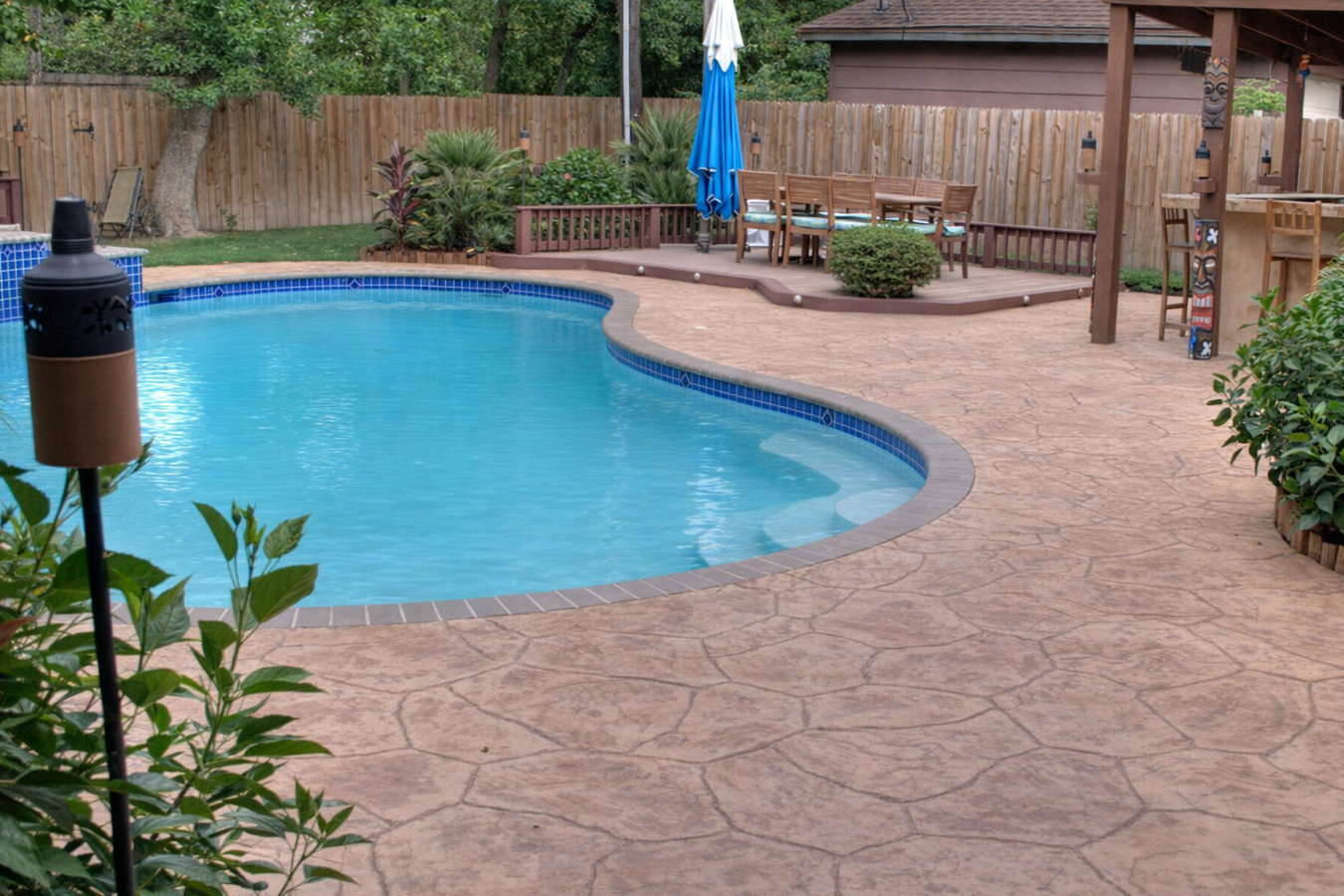
Palo Alto's long, sunny summers make outdoor pools a genuine lifestyle asset, and an aging or cracked pool deck creates both a safety hazard and an eyesore on a property worth protecting. Original pool decks on homes from the 1960s and 1970s are often pitched toward the pool rather than away from it, which keeps water against the foundation instead of draining it. Our concrete pool deck work corrects slope, replaces failing panels, and delivers a slip-resistant broom or exposed aggregate finish that holds up to years of UV and water exposure.
Many Palo Alto driveways date to the original construction of Eichler homes and other postwar subdivisions - now 60 or more years old and showing the results of clay soil movement, tree root lift, and slab thickness that does not meet modern standards. Replacing a failing driveway also provides the opportunity to correct drainage that sends runoff toward the structure rather than away from it, a common problem on flat or mildly sloped Eichler-era lots.
Palo Alto homeowners with large rear yards in neighborhoods like Old Palo Alto and Crescent Park often want a patio that complements the architecture without requiring ongoing wood maintenance. Poured concrete handles the thermal movement of Bay Area summers and foggy mornings better than composite decking, holds furniture without rocking, and can be stamped or textured to match the character of older homes. Clay soil under the slab requires a properly compacted base to prevent future settling.
Eichler homes were built on slab-on-grade foundations, and additions, garage conversions, and ADU construction on these properties require slab work that integrates correctly with the existing system. New slabs adjacent to post-tension Eichler slabs require careful layout to avoid disturbing active tendon zones. We assess the existing foundation conditions before designing and pouring any new slab on an Eichler or similar property.
High home values in Palo Alto make finish quality a priority, and decorative concrete lets homeowners achieve the look of natural stone or wood plank at a fraction of the material cost with far less maintenance. Stamped and colored concrete is especially popular for courtyard entries and pool surrounds on larger properties near the Stanford campus edge. Every decorative project is sealed at installation to protect the finish from UV fading and moisture intrusion.
Entry steps on Palo Alto's older homes often show spalling, settlement, and cracked risers that create both a liability risk and a poor first impression on a property where curb appeal matters. Steps that have settled away from the threshold leave a gap where water collects and works against the foundation over time. We replace deteriorated steps with properly formed poured concrete that meets current riser and tread code requirements for the City of Palo Alto.
A significant portion of Palo Alto's residential housing is made up of Eichler homes, which were built in the 1950s and 1960s on post-tension slab-on-grade foundations. That construction method is fundamentally different from the stem wall and raised foundation approach used in most of the Bay Area. Any concrete work on or adjacent to an Eichler slab - cutting, coring, or placing a new adjacent slab - has to account for the tendon layout to avoid damaging or severing active post-tension cables. Contractors unfamiliar with this system can cause expensive structural damage.
Beyond Eichler properties, Palo Alto has a large share of older ranch homes and larger estate-style properties in neighborhoods like Crescent Park, Old Palo Alto, and Midtown. These properties often have mature tree canopies with roots that have been lifting and cracking sidewalk panels, driveway aprons, and patio edges for decades. Working around heritage trees - which Palo Alto protects with strict tree ordinances - requires care in planning excavation and forming to avoid root damage that could trigger a code violation.
Palo Alto's proximity to the bay also means morning fog and higher relative humidity during spring and early summer. Concrete poured in high-humidity conditions needs proper curing procedures to prevent surface scaling. The city's mild winters reduce freeze-thaw risk, but the wet season still drives drainage issues, and concrete that doesn't slope correctly will pool water against foundations and walls. Getting drainage right at the forming stage prevents problems that are costly to fix after the pour.
We work regularly in Palo Alto's Eichler neighborhoods and file permitted concrete work through the City of Palo Alto Planning and Development Services, which issues building permits and encroachment permits for work affecting public rights-of-way. Permit timelines in Palo Alto can run several weeks for non-express applications, so we factor that into project scheduling from the first conversation.
The California Avenue corridor runs through the southern part of the city and connects a mix of retail, office, and residential properties. North of University Avenue, Old Palo Alto and Crescent Park have some of the largest lots and oldest homes in the city. The streets near the Stanford campus edge - between El Camino Real and Campus Drive - have a mix of university-affiliated housing and older rental stock. Each of these areas has its own typical concrete conditions, and our crew does not treat them the same.
We also serve neighboring Mountain View and Sunnyvale, which share similar clay soil conditions and postwar housing stock with Palo Alto. Homeowners near city boundaries can call us for any of their concrete needs without wondering which service zone applies.
Reach us by phone or through our contact form and describe what you need. We respond within one business day to schedule an on-site visit at a time that works for your schedule.
We visit the property, measure the area, assess soil and drainage conditions, and check for any post-tension slab indicators on Eichler properties. You receive a written estimate with a line-item breakdown - no price surprises when the work starts.
We handle the permit application to the City of Palo Alto Planning and Development Services on your behalf. Once approved, we schedule the pour date and coordinate any demo or subbase prep in advance so the crew arrives ready to work.
We complete the work, seal the surface where applicable, and leave the site clean. Concrete requires a minimum 28-day cure before heavy vehicle loads - we explain what you can and cannot do during that window before we leave.
We serve Palo Alto homeowners with written estimates, handled permits, and a crew that knows Eichler slabs and older estate properties. Call or use the form - we reply within one business day.
(669) 285-6074Post-tension cable systems in Eichler slabs require a tendon location scan before any saw cutting or core drilling - severing an active cable causes immediate structural damage that is expensive to fix. We perform this assessment as a standard step on every Palo Alto Eichler project. No shortcuts.
Palo Alto's permitting process for concrete work involves both building permits and, for sidewalk and apron work, encroachment permits. We prepare and submit complete applications and manage the back-and-forth with the city so homeowners do not have to navigate that process themselves. All work is inspected and approved before the project closes.
Santa Clara Concrete Company has worked throughout the Peninsula - Palo Alto, Mountain View, Cupertino, and into San Jose - since 2022. The crew knows the soil conditions, the permit offices, and the typical construction details on homes across this part of the Bay Area. That familiarity shortens the gap between estimate and completed job.
Every Palo Alto project gets a written estimate with a line-item breakdown before any deposit is collected. High home values in this city mean project costs are proportionally higher - homeowners deserve to know exactly what they are authorizing before a crew shows up. If site conditions change what is needed, we discuss revisions with the homeowner before proceeding.
Palo Alto homeowners deal with a unique combination of factors - Eichler slab conditions, heritage tree ordinances, clay soil movement, and a permitting office with its own specific requirements. We have worked through all of these on real Palo Alto projects and bring that working knowledge to every estimate visit. Call us or submit a request online to get started.
Palo Alto is a city of roughly 65,000 residents on the San Francisco Peninsula, bordered by Menlo Park to the north, Mountain View to the south, and the foothills of the Santa Cruz Mountains to the west. Stanford University sits within and adjacent to the city, making it one of the most recognizable addresses in California. The city is home to a substantial share of single-family residential neighborhoods, with Old Palo Alto, Crescent Park, and Midtown among the most established. According to the city's history, Palo Alto was incorporated in 1894 and has been a center of innovation and education ever since.
A distinctive feature of Palo Alto's housing stock is the concentration of Eichler homes built by developer Joseph Eichler in the 1950s and 1960s. These mid-century modern homes are recognized for their flat or low-pitched roofs, open floor plans, and slab-on-grade post-tension foundations. They are found in several Palo Alto neighborhoods including Greenmeadow, Fairmeadow, and parts of Midtown. Alongside the Eichler stock are larger older homes in Old Palo Alto and Crescent Park, where lots can exceed 10,000 square feet and landscaping includes mature trees protected by the city's heritage tree ordinance. Neighboring Mountain View shares the same postwar ranch-home character and clay soil conditions.
University Avenue is the city's main commercial corridor, running from the Caltrain station through downtown toward the Stanford campus. California Avenue to the south hosts a smaller, neighborhood-scale retail district. The city has a mild Mediterranean climate with warm, dry summers and a concentrated rainy season from November through March. Concrete surfaces installed without proper drainage slope are exposed to water pooling during winter storms, which is among the most common causes of premature concrete failure in this area. Homeowners in Campbell and other nearby cities face similar seasonal maintenance considerations.
Durable concrete driveways designed to handle daily traffic and last for decades.
Learn moreCustom concrete patios that extend your living space and add lasting value.
Learn moreStamped concrete that replicates stone, brick, or tile at a fraction of the cost.
Learn moreSafe, level concrete sidewalks for residential and commercial properties.
Learn moreStrong, smooth garage floors that resist oil, stains, and heavy loads.
Learn moreDecorative finishes that turn plain concrete into an attractive surface.
Learn moreStructural retaining walls that hold back soil and prevent erosion.
Learn moreInterior and exterior concrete floors installed to a smooth, level finish.
Learn moreSlip-resistant pool decks that are comfortable underfoot and easy to maintain.
Learn moreSolid concrete steps built to meet code and stand up to daily foot traffic.
Learn moreConcrete slab foundations poured to spec for new construction and additions.
Learn moreFull foundation installation for residential and light commercial projects.
Learn moreHeavy-duty concrete parking lots that outlast asphalt with less maintenance.
Learn moreFoundation raising to correct settling and restore structural integrity.
Learn moreServing these cities and communities.
Eichler slabs, pool decks, driveways, patios - we handle all of it with permits and written pricing. Palo Alto jobs fill up quickly in spring and summer, so reach out now to get on the schedule.