Serving Santa Clara, CA and surrounding areas. (669) 285-6074
Serving Santa Clara, CA and surrounding areas. (669) 285-6074
Santa Clara Concrete Company is a licensed concrete contractor serving Newark, CA with garage floor installation, driveway replacement, patio construction, and foundation work on the flat Bay plain lots throughout the city. We respond within one business day, pull the permits, and give you a written estimate before we start.
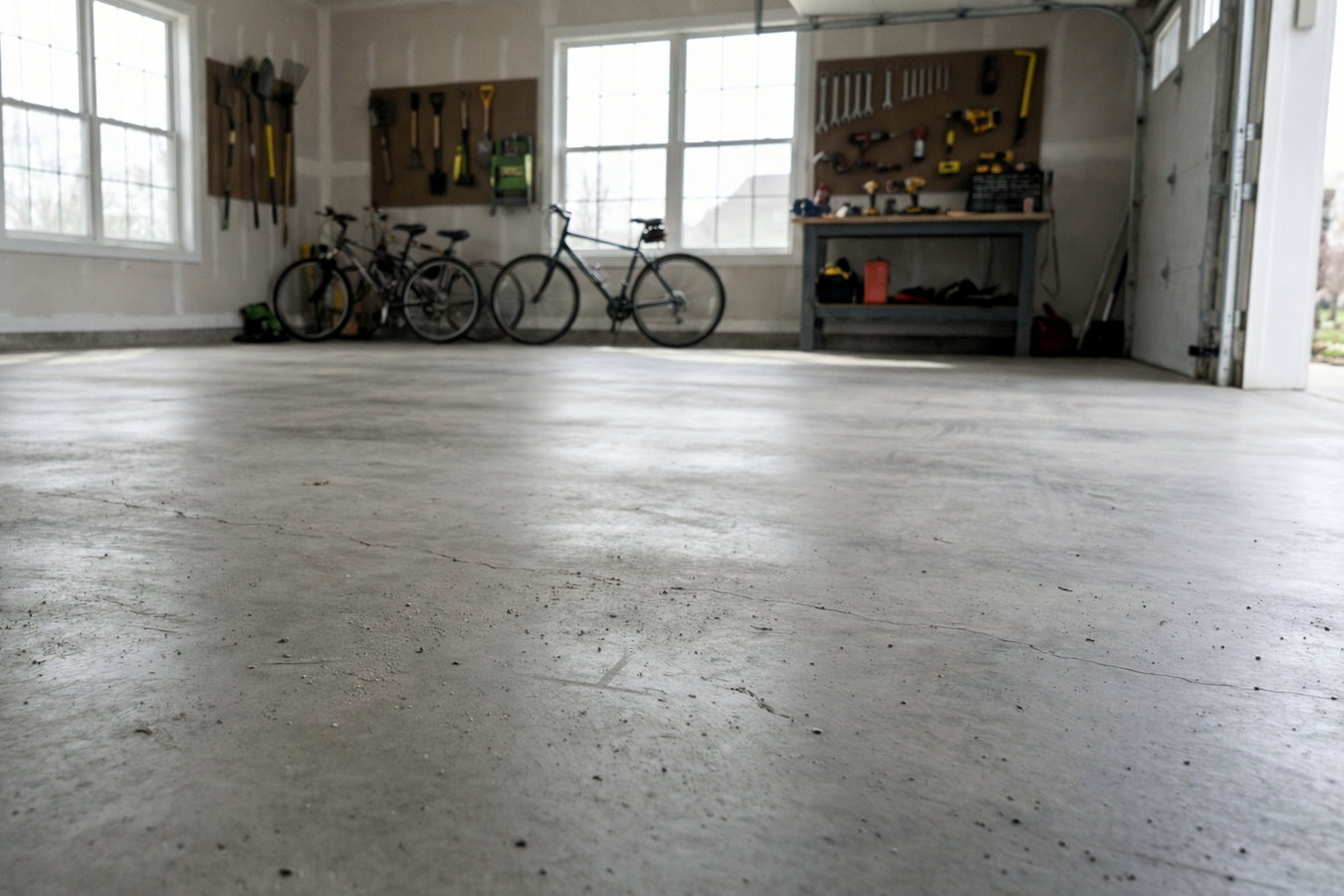
Newark's single-family homes from the 1950s through 1970s typically have attached garages with original concrete floors that are now six or more decades old. Clay soil movement has cracked most of them, and many have settled enough to create low spots where water pools after rain. Our garage floor concrete service handles the full process: demolition, proper gravel base, and a new poured slab with a clean broom finish or sealer, ready for daily vehicle use.
Driveways on Newark's older residential streets are among the most commonly cracked in the region because the flat Bay plain soil expands and contracts with every wet and dry season cycle. An original 1960s driveway on native clay without a gravel base has been working against that movement for 60-plus years. We remove the old slab, excavate and compact an adequate gravel base, and pour a replacement driveway at the correct thickness so it performs well on Newark's soil.
Newark's mild Bay-influenced climate means backyard patios get regular use across most of the year, but many of the city's older homes either have no rear patio or a deteriorating slab that has tilted and cracked. Flat lots here require deliberate drainage slopes on any poured surface to direct water away from the house foundation - a step that is easy to skip but costly to correct later. We grade and form every patio with the drainage your specific backyard needs.
Newark's Bay plain soils require careful subbase preparation before any new foundation slab is poured - fill soils and clay can compress unevenly under new loads if not properly compacted and drained. Garage conversions and ADU additions in the city are subject to City of Newark Building Services review, and the permit application requires documentation of slab thickness and rebar layout. We design and pour foundation slabs that meet current building code requirements and pass inspection on the first review.
Newark property owners are responsible for sidewalk panels fronting their property, and cracked or uneven panels can create a trip hazard liability. The flat terrain here means root damage from street trees accumulates gradually and may not be obvious until a panel has lifted significantly. We replace damaged panels to grade, file the encroachment permit required for work in the public right-of-way, and match the adjacent panel height so the finished walk is level.
Newark has a mix of residential and light-industrial properties, and concrete floors for workshop spaces, storage buildings, and commercial tenant improvements come up regularly in our work here. A floor for a light-industrial use needs greater thickness and reinforcement than a residential garage, and drainage provisions inside the slab are important for any space where water or chemicals might be present. We match the floor specification to the actual use of the space.
Newark is built on flat Bay plain terrain, and almost every residential property in the city sits on the same expansive clay and sandy fill soils. That uniformity has one predictable consequence: virtually every home built in the postwar decades has concrete flatwork - driveways, patios, garage floors, sidewalks - that was installed directly on native soil without adequate base preparation. Those slabs have been responding to the soil's seasonal expansion and contraction ever since, and most of them show it.
The flat lot character of Newark also means drainage has to be actively designed into any new concrete surface. On sloped terrain, water moves away from structures naturally. On a flat lot, a concrete patio or driveway that is poured without a deliberate drainage slope will pond water, and water that sits against the house foundation or beneath a slab accelerates the clay soil movement that damages concrete from below. Getting the grade right at the pour stage is far less expensive than correcting drainage problems after the slab is in place.
Newark also sits adjacent to Fremont along the Hayward Fault corridor, and foundation work in this part of Alameda County is reviewed by building inspectors who apply the same seismic requirements as neighboring cities. New foundation slabs for ADUs and garage conversions in Newark must account for current anchor-bolt and reinforcement standards regardless of the age of the surrounding house. We build to those current requirements so the foundation passes inspection and gives the structure the seismic performance the code is designed to deliver.
Concrete work in Newark is permitted through the City of Newark Community Development Department, which handles both building permits for structural concrete and encroachment permits for public sidewalk work. We submit complete permit packages to avoid revision requests and schedule work around permit approval so there is no gap between prep and pour.
Willow Street and Cedar Boulevard are the main arterials through the residential core, and the neighborhoods off those streets - modest single-family homes on rectangular lots - represent the typical Newark concrete project: a garage floor, a driveway, or a rear patio on a flat lot with clay soil underneath. The work is straightforward when the base preparation is done right, and it fails predictably when it is not.
Newark's western boundary runs alongside the Coyote Hills Regional Park wetlands, and properties on the western edge of the city can have soil that retains moisture longer than properties in the interior. That additional moisture retention increases the seasonal expansion cycle on flatwork and foundation slabs. We often work simultaneously across Newark and neighboring Fremont, where the soil and housing stock are nearly identical, and both cities benefit from the same base preparation approach.
Reach us by phone or through the contact form with a description of what you need. We respond within one business day to confirm the details and schedule a site visit.
We assess the soil conditions, drainage, and existing concrete, then provide a written line-item estimate. You know the full project cost before committing, and the estimate does not expire while you decide.
We file the required building or encroachment permits with the City of Newark and schedule your project once permits are approved. You do not need to manage the permit process yourself.
After the pour we remove all debris and haul off demolished material. We walk you through the finished work and explain the curing timeline - typically 24 to 48 hours for foot traffic and 7 days before vehicle use.
We serve Newark and neighboring Alameda County communities. Written estimates, permits handled, one business day response.
(669) 285-6074Newark is a small city of roughly 50,000 residents in southern Alameda County, bordered by Fremont to the south and east, Union City to the north, and the San Francisco Bay to the west. The city developed rapidly in the postwar decades as affordable housing demand spread through the Bay Area, and its residential character reflects that origin: modest single-family homes on rectangular lots, mostly built between the 1950s and 1970s, with mature street trees and attached garages that have seen decades of use.
Cedar Boulevard and Willow Street serve as the main commercial and transit corridors through the residential core. The western edge of the city borders the Coyote Hills Regional Park, a wetlands and open space preserve that gives the western neighborhoods a more open feel than the denser residential streets toward the Fremont border. Newark's flat terrain and Bay plain soil make it one of the more consistent concrete markets in the area - the soil conditions and housing age are nearly uniform across the city.
For homeowners comparing service providers, neighboring Fremont has virtually identical concrete conditions - the same clay Bay plain soils, the same postwar housing stock, and the same seasonal cracking patterns. Both cities benefit from the same approach to base preparation and drainage design.
On Newark's flat lots, water does not drain naturally away from the house. We design the drainage slope into every driveway, patio, and garage floor so water moves where you want it - and away from the foundation that supports your home.
The clay soils across Newark require a specific compacted gravel base depth before any slab is poured. We adjust that depth based on the soil conditions at your property, not a generic spec, because cutting the base short is the most common reason new concrete fails prematurely here.
We file building and encroachment permits with the City of Newark as part of every project. Unpermitted concrete work can create problems at resale and may void homeowners insurance coverage for related claims. Every job we complete leaves a clean permit record in the city's system.
Newark homeowners should not commit to any concrete project without a written line-item price. We provide one on every estimate visit, covering demolition, base preparation, forming, the pour, and cleanup separately so you can see exactly what you are paying for.
Newark is a straightforward concrete market because the soil conditions and housing stock are consistent across the city. We know what that soil requires at the base, we build to it on every project, and we stand behind the work with a permit record that protects your investment at resale.
Durable concrete driveways designed to handle daily traffic and last for decades.
Learn moreCustom concrete patios that extend your living space and add lasting value.
Learn moreStamped concrete that replicates stone, brick, or tile at a fraction of the cost.
Learn moreSafe, level concrete sidewalks for residential and commercial properties.
Learn moreStrong, smooth garage floors that resist oil, stains, and heavy loads.
Learn moreDecorative finishes that turn plain concrete into an attractive surface.
Learn moreStructural retaining walls that hold back soil and prevent erosion.
Learn moreInterior and exterior concrete floors installed to a smooth, level finish.
Learn moreSlip-resistant pool decks that are comfortable underfoot and easy to maintain.
Learn moreSolid concrete steps built to meet code and stand up to daily foot traffic.
Learn moreConcrete slab foundations poured to spec for new construction and additions.
Learn moreFull foundation installation for residential and light commercial projects.
Learn moreHeavy-duty concrete parking lots that outlast asphalt with less maintenance.
Learn moreFoundation raising to correct settling and restore structural integrity.
Learn moreServing these cities and communities.
Call us today or submit the contact form. We respond within one business day, pull the permits, and give you a complete written price before work starts.